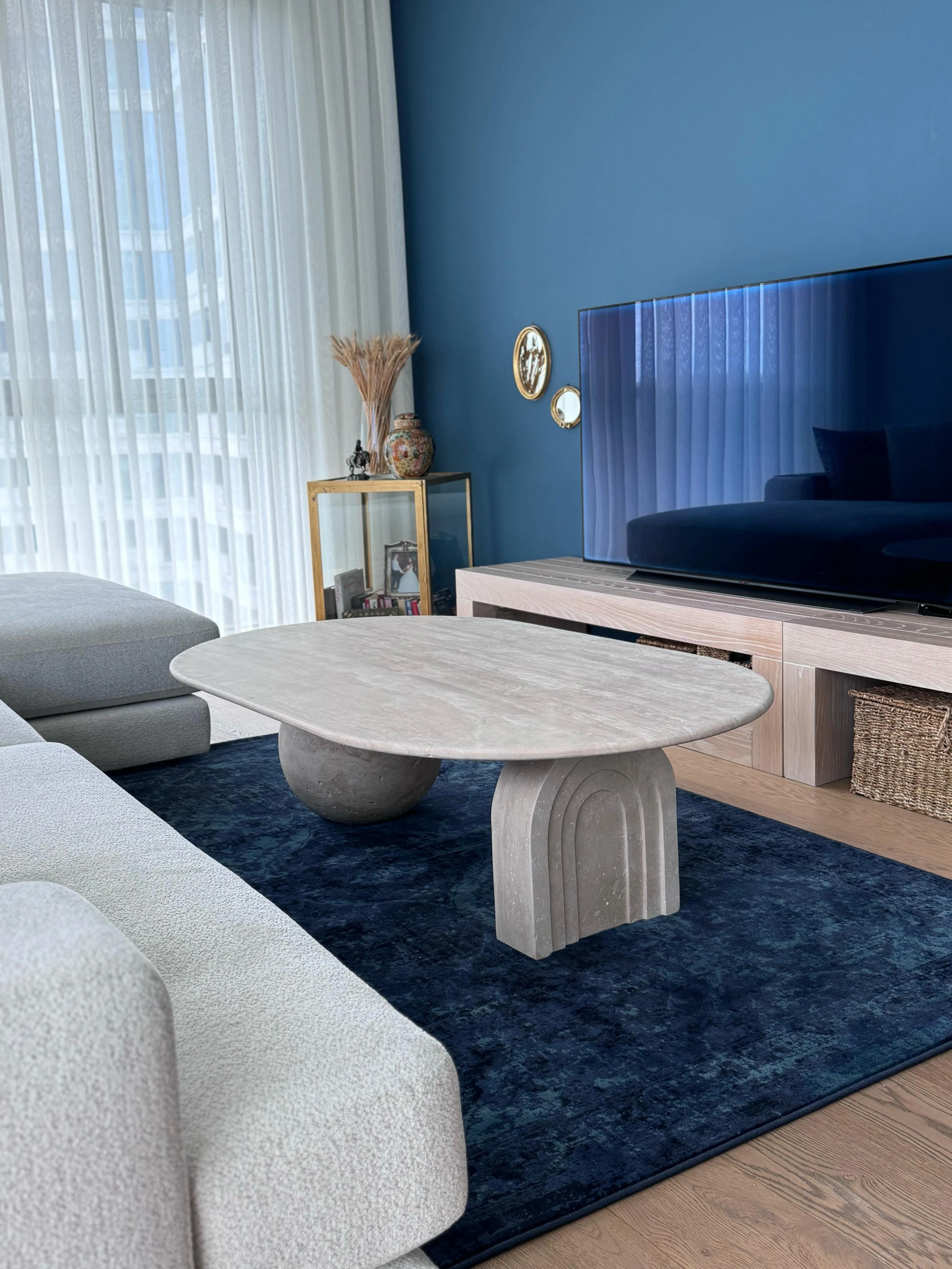
Travertin Coffee Table - Modern design
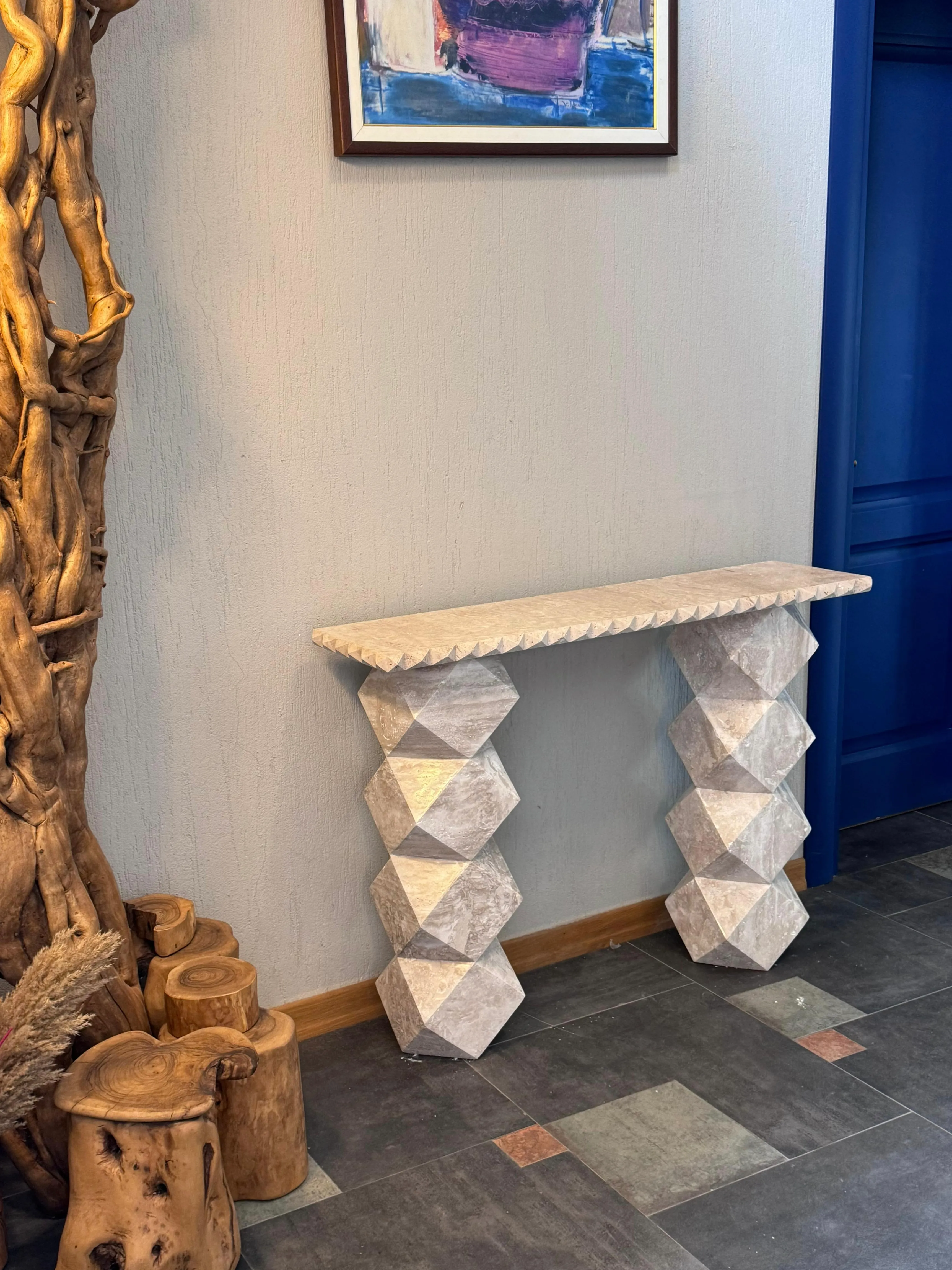
Travertin Console Table - Traun
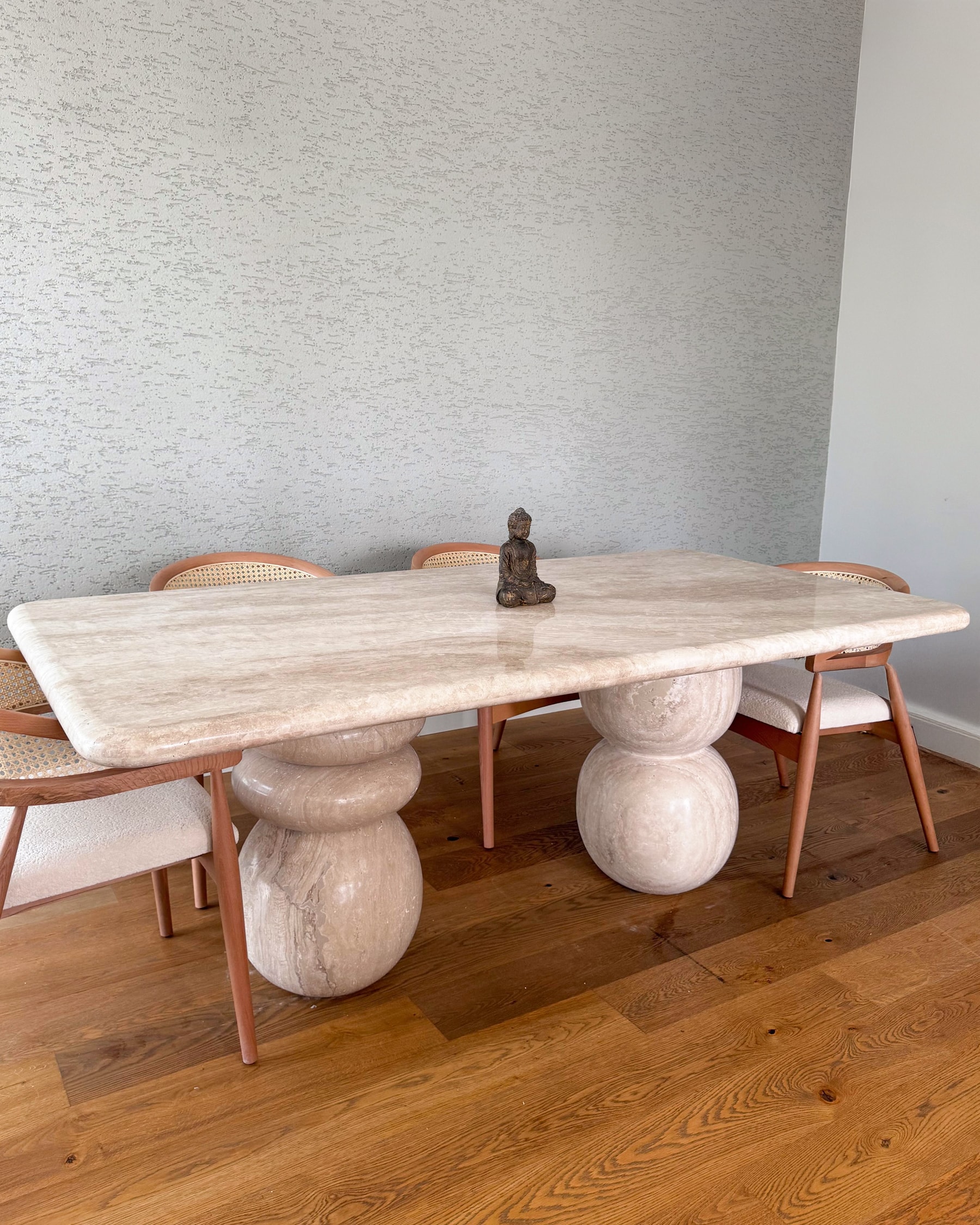
Travertine Dining Table Oval - Balance Stone
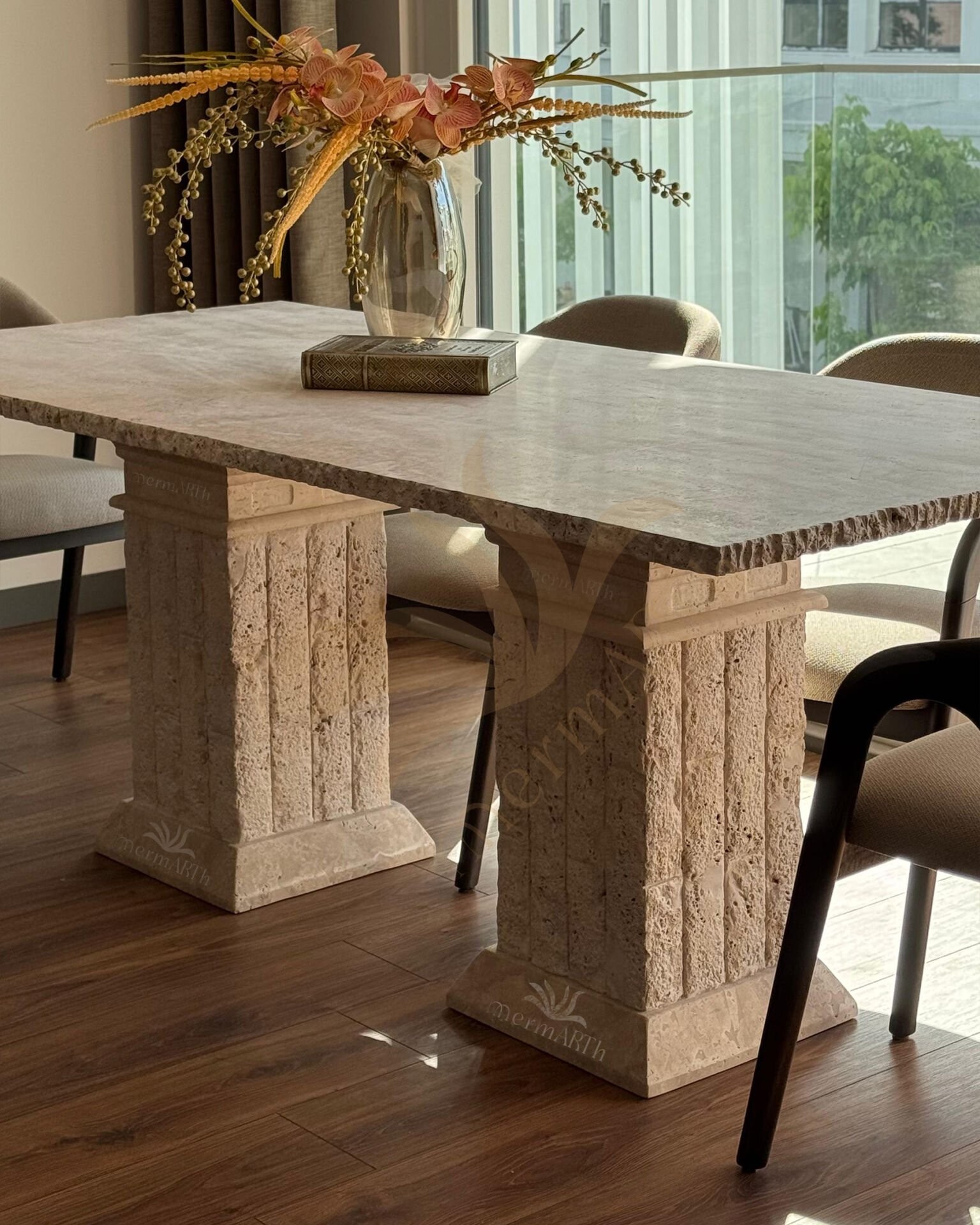
Travertine Dining Table - Unique Gothic

Travertine Dining Table - Ellipse Model

EsstischStuhl & Edle
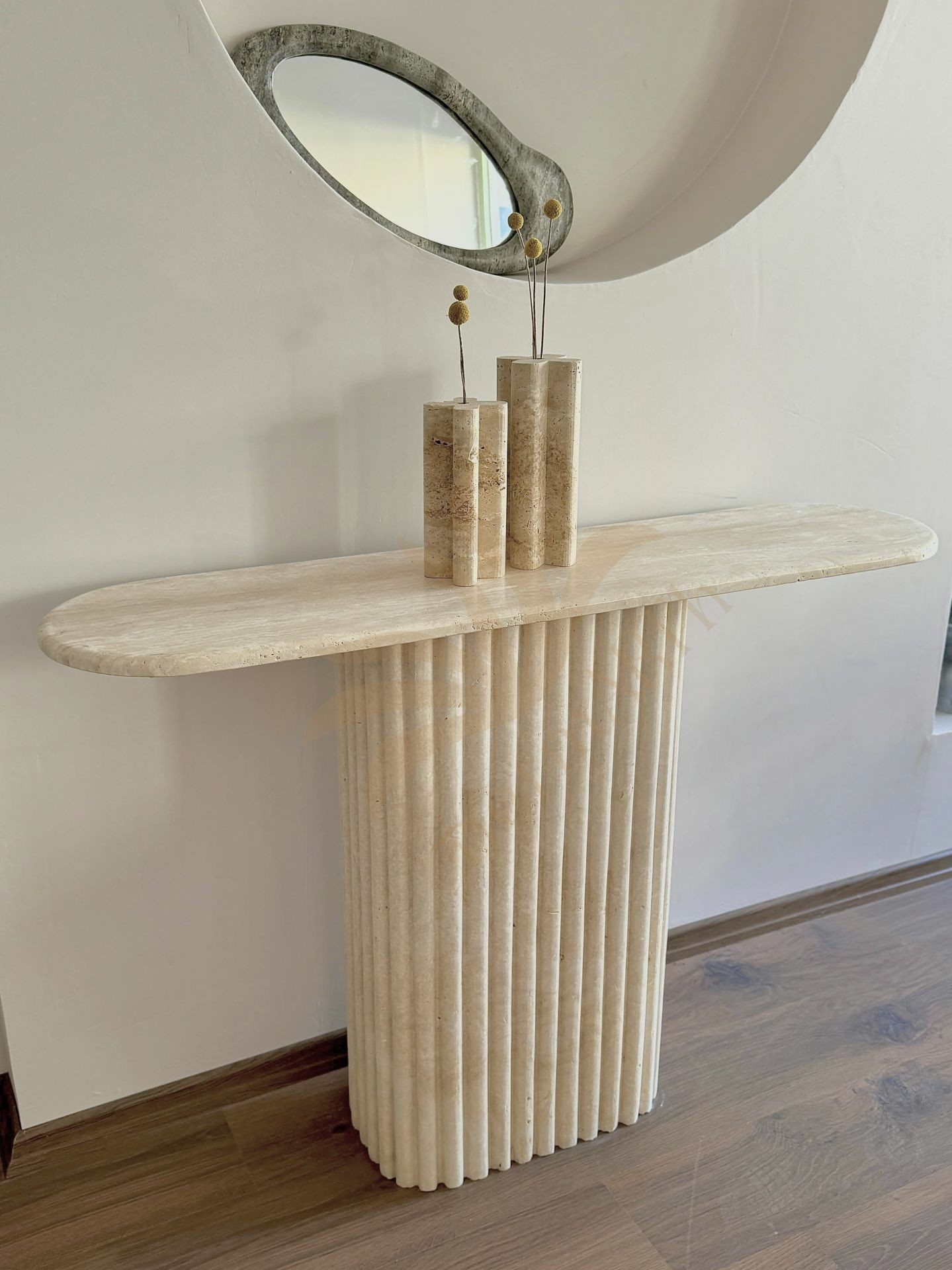
Travertine Console & Model Slats
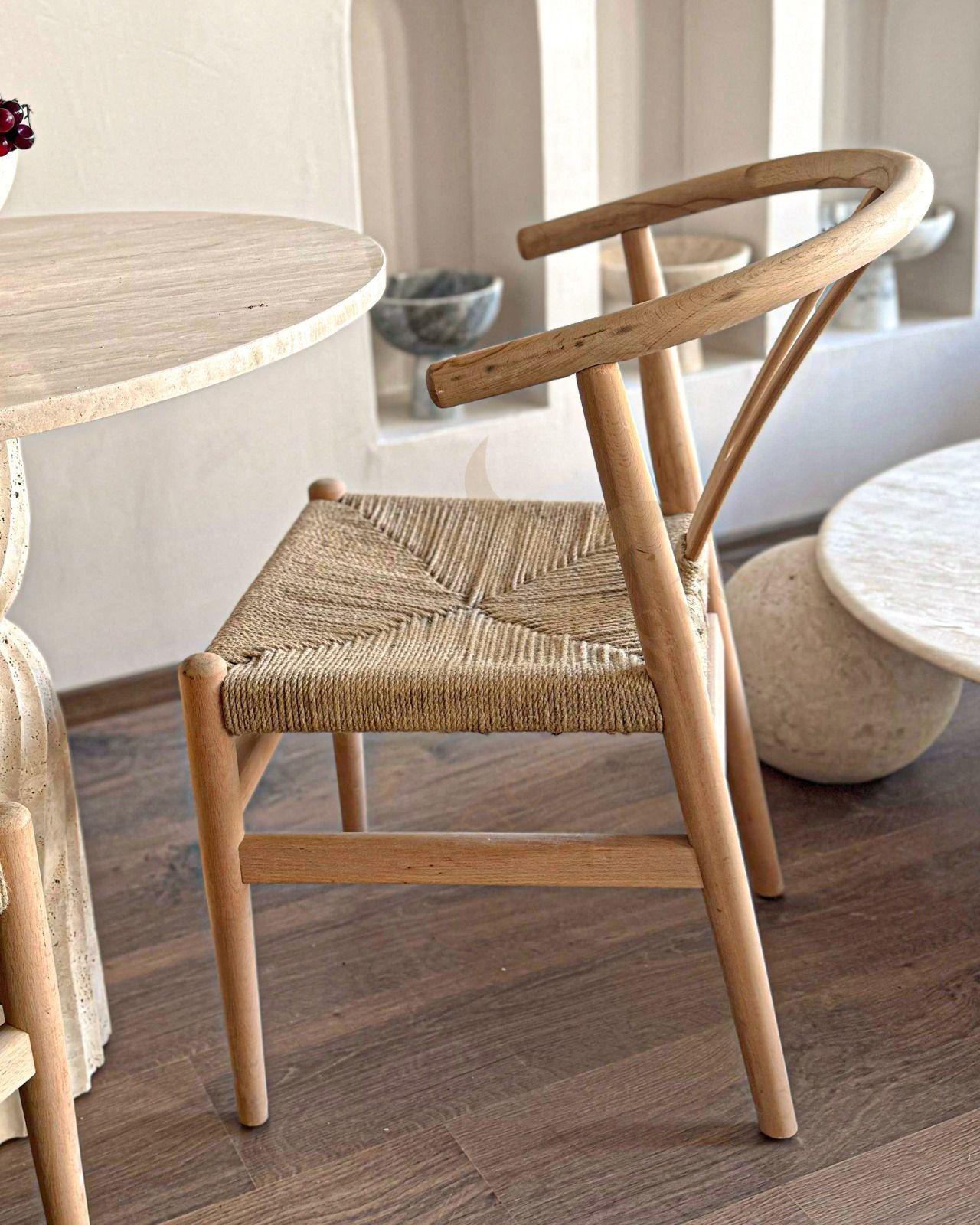
EsstischStuhl & Handgestrickt
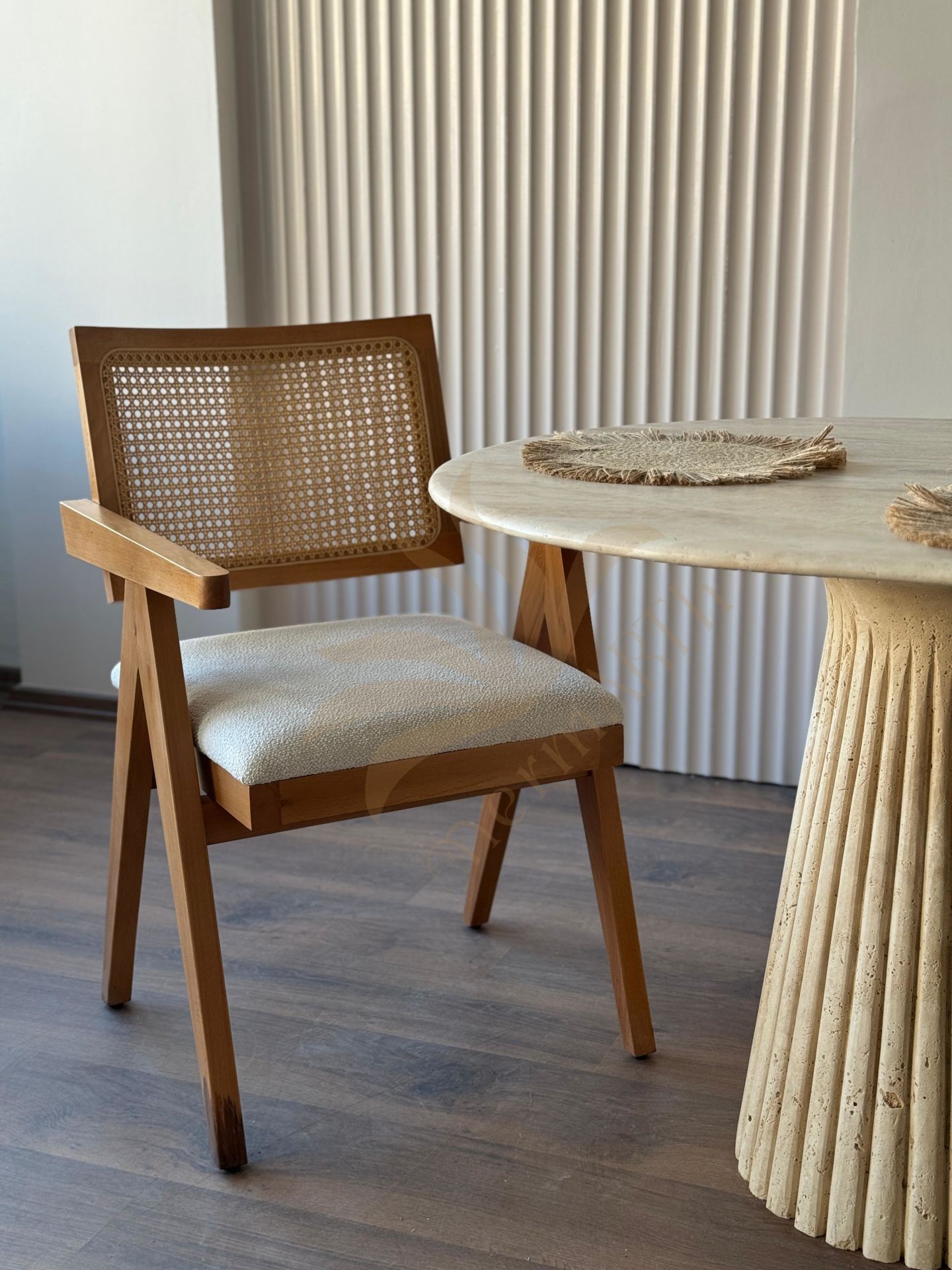
EsstischStuhl & Dore
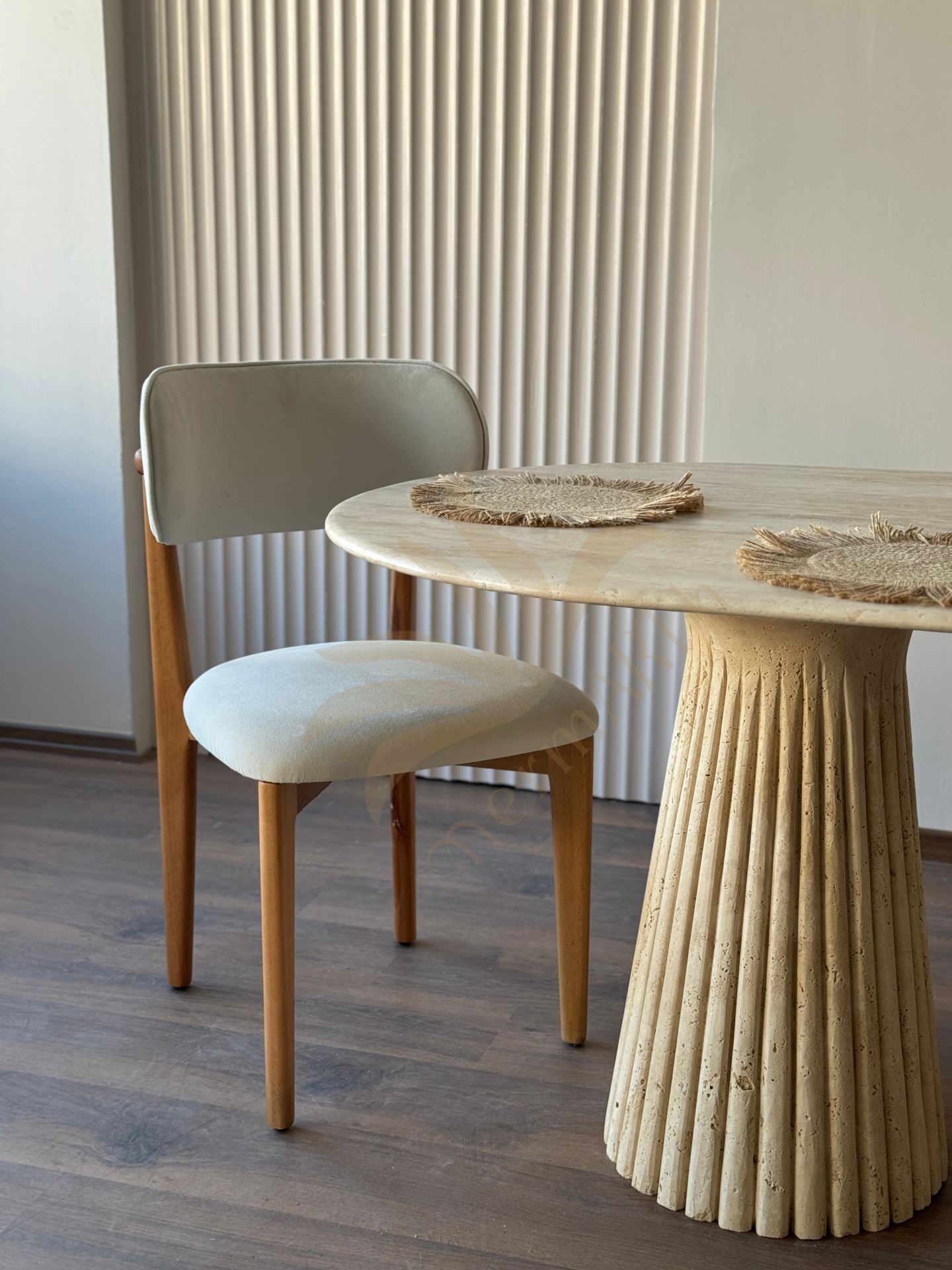
Esstischstuhl & Gons
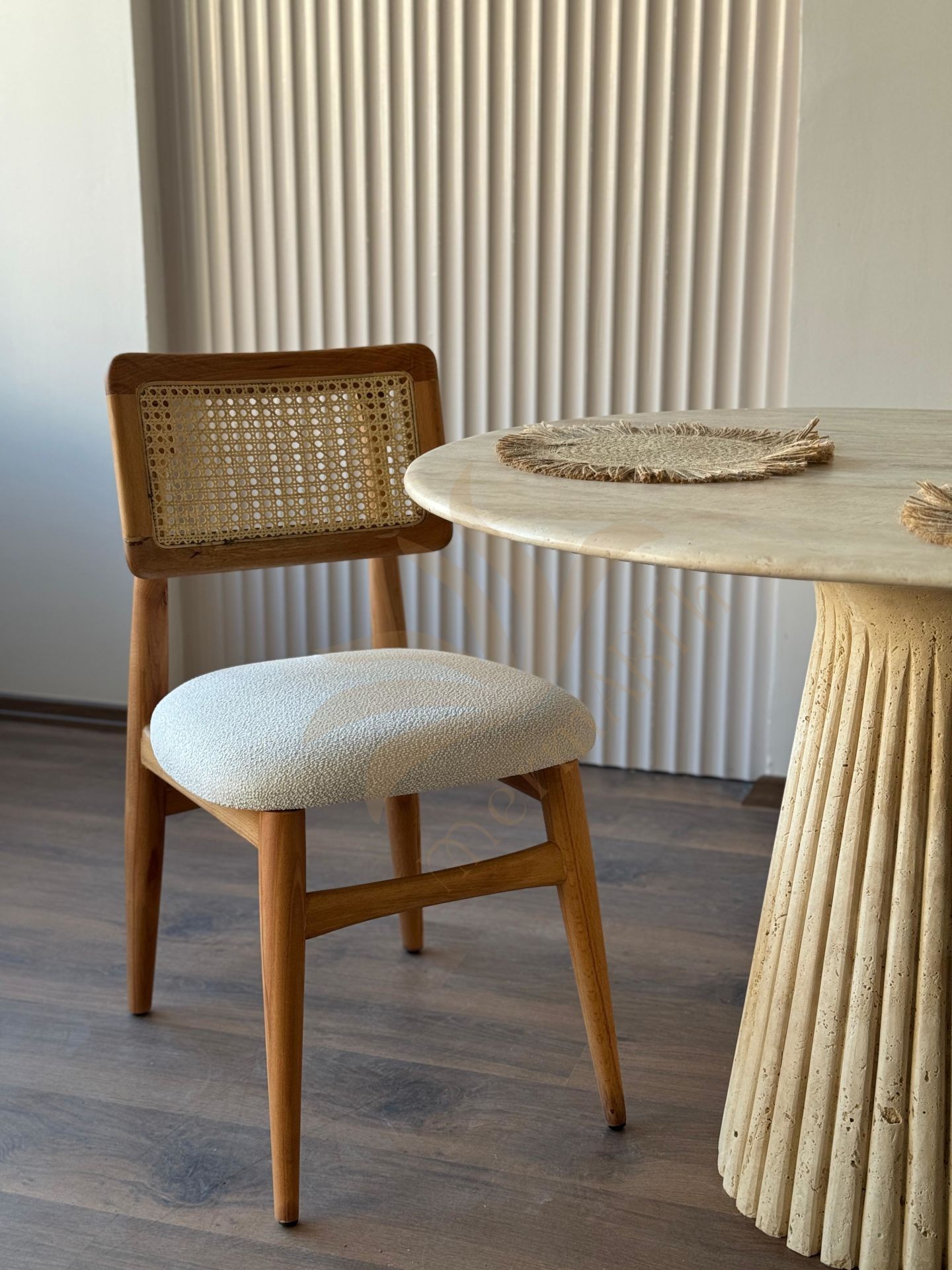
EsstischStuhl & Belegschaft
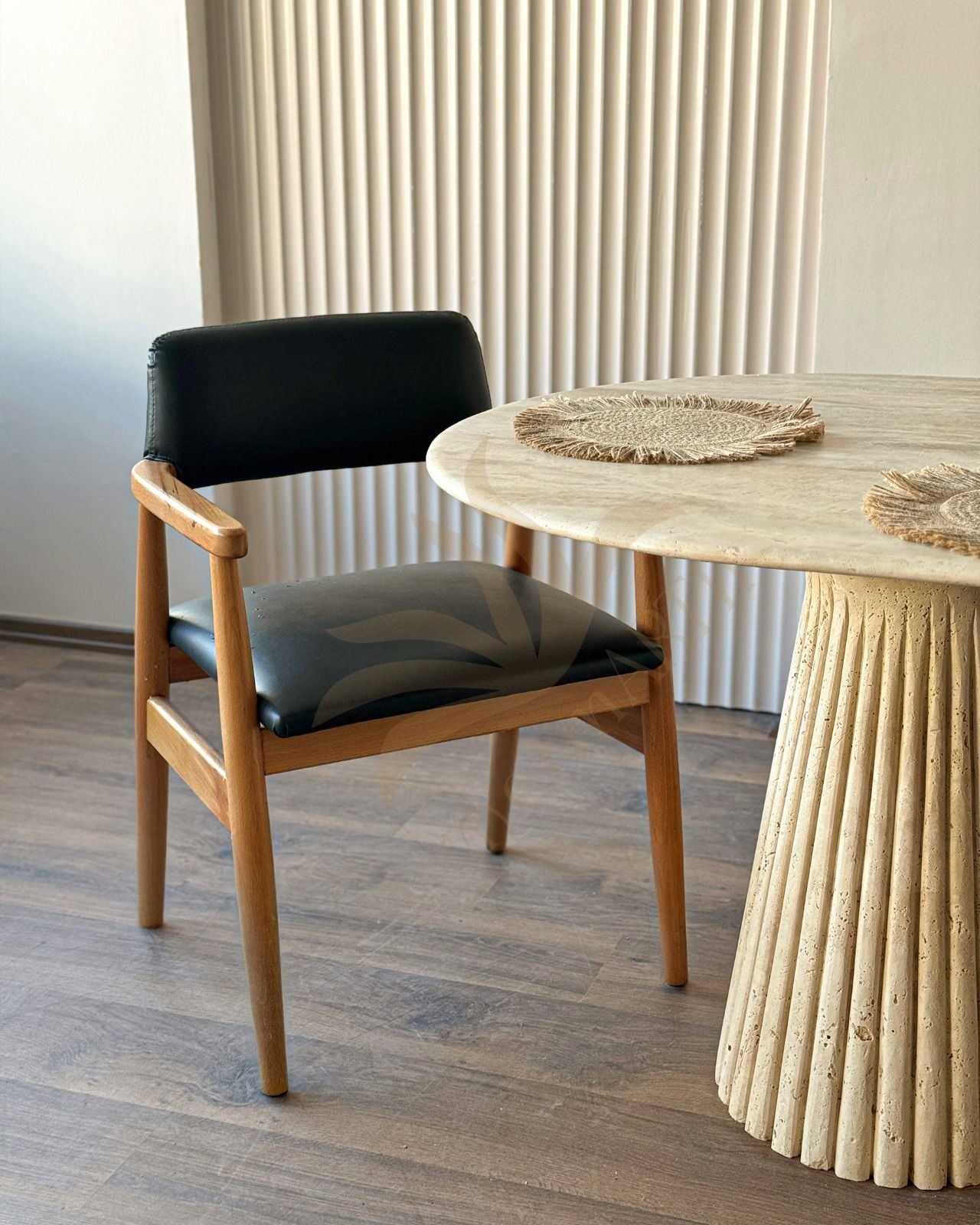
EsstischStuhl & Ako
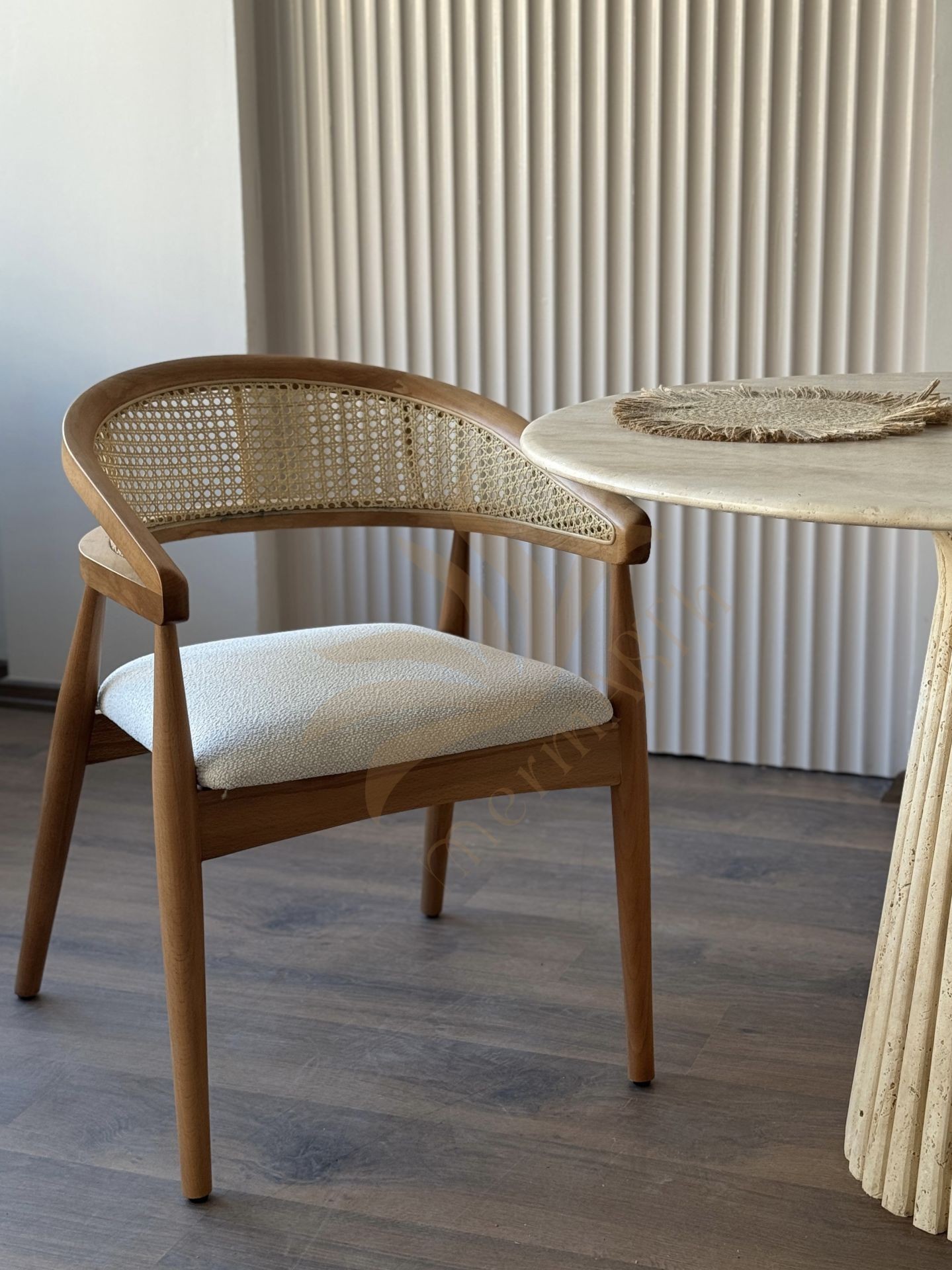
Esstischstuhl & Tyga
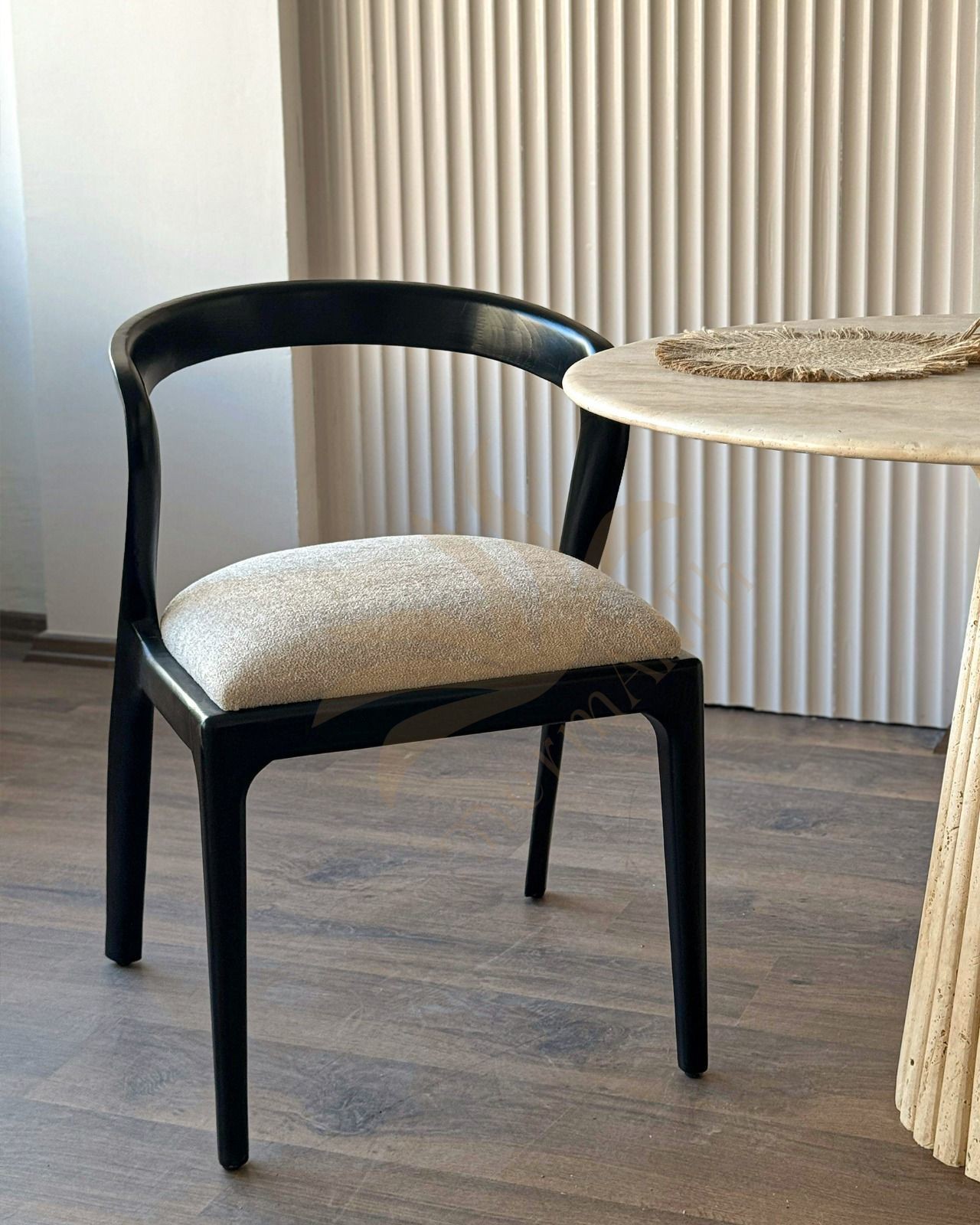
EsstischStuhl & Melda

Travertine Dining Table - Julia
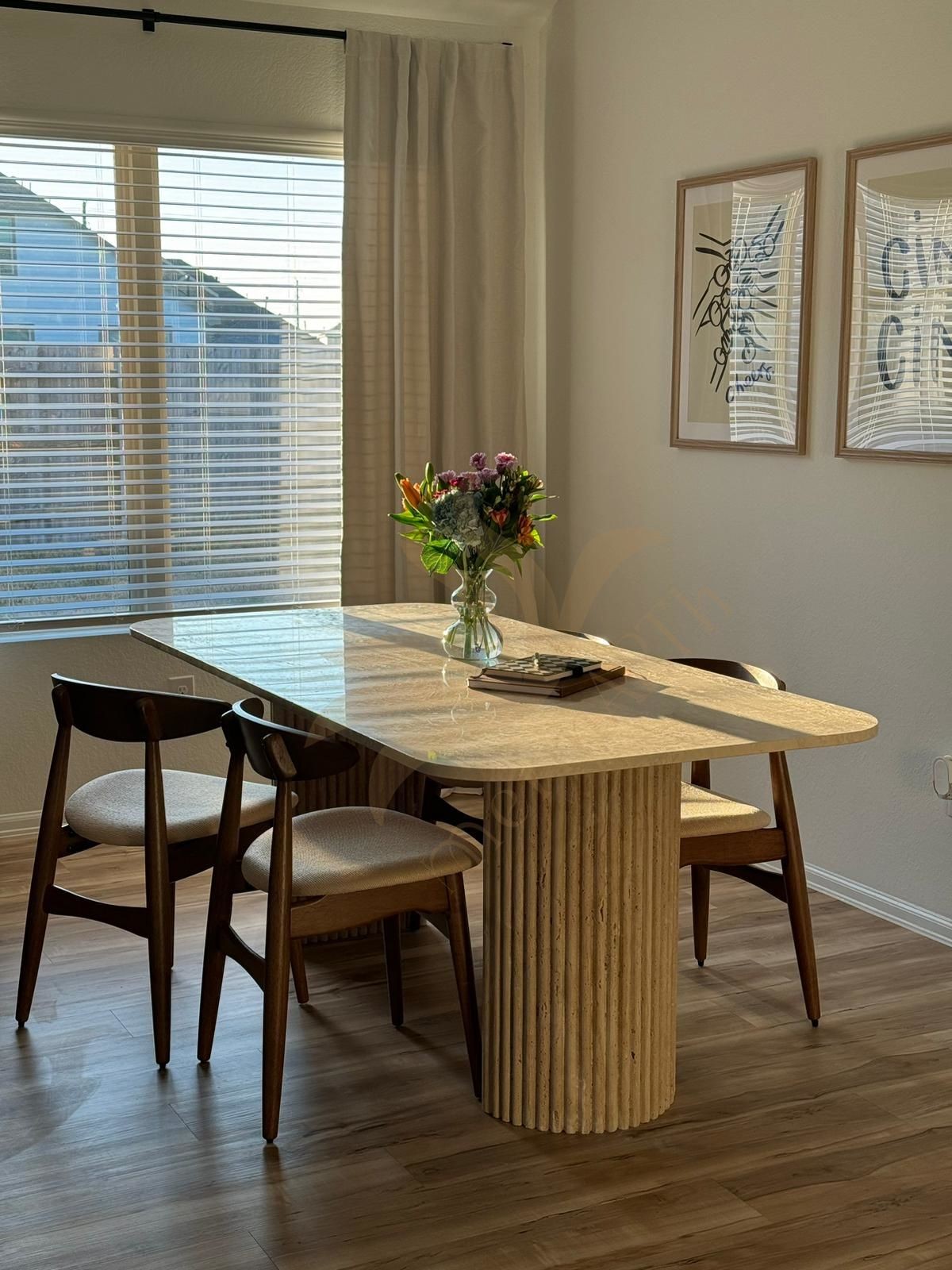
Travertine Dining Table & Natural Stone
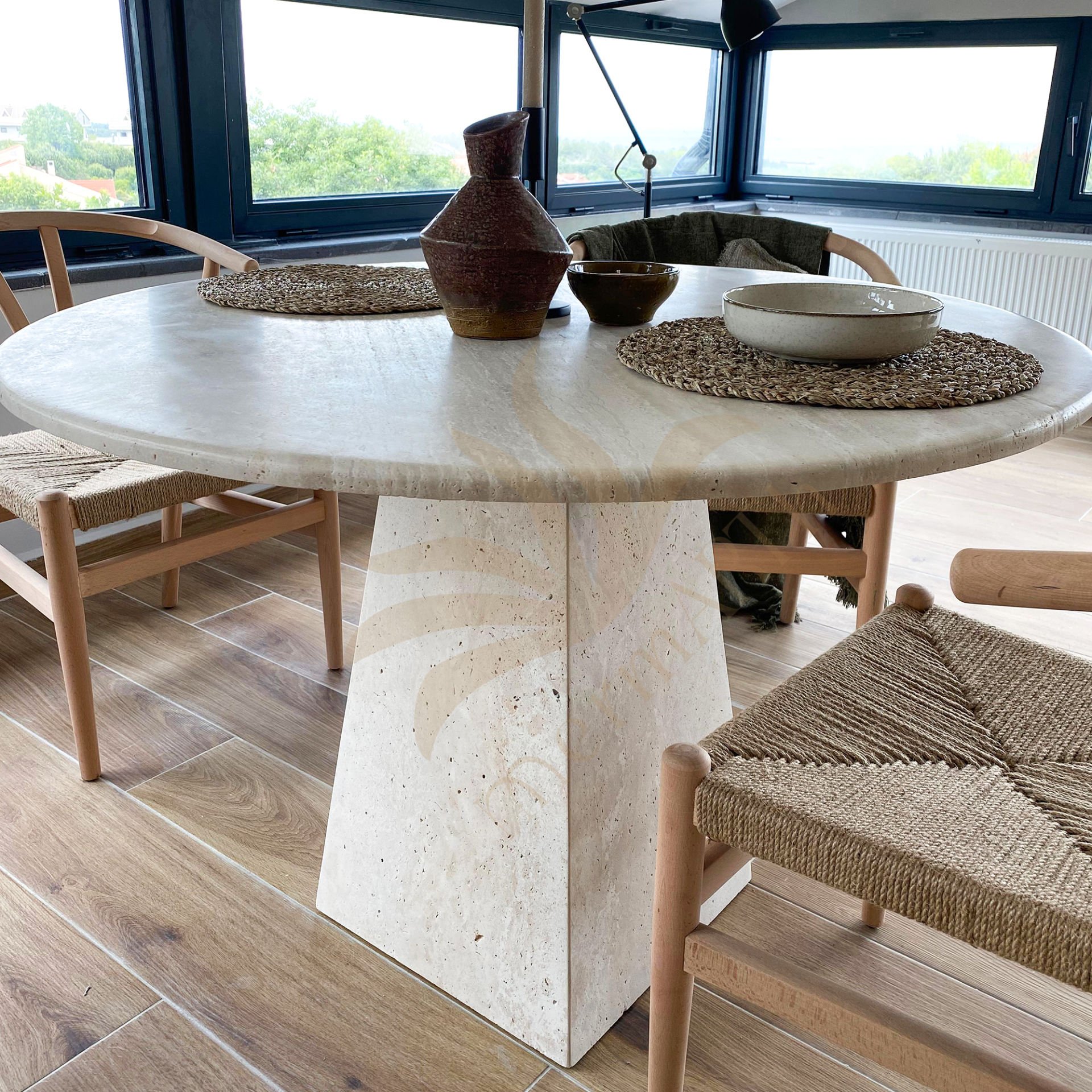
Round Dining Table & Natural Stone
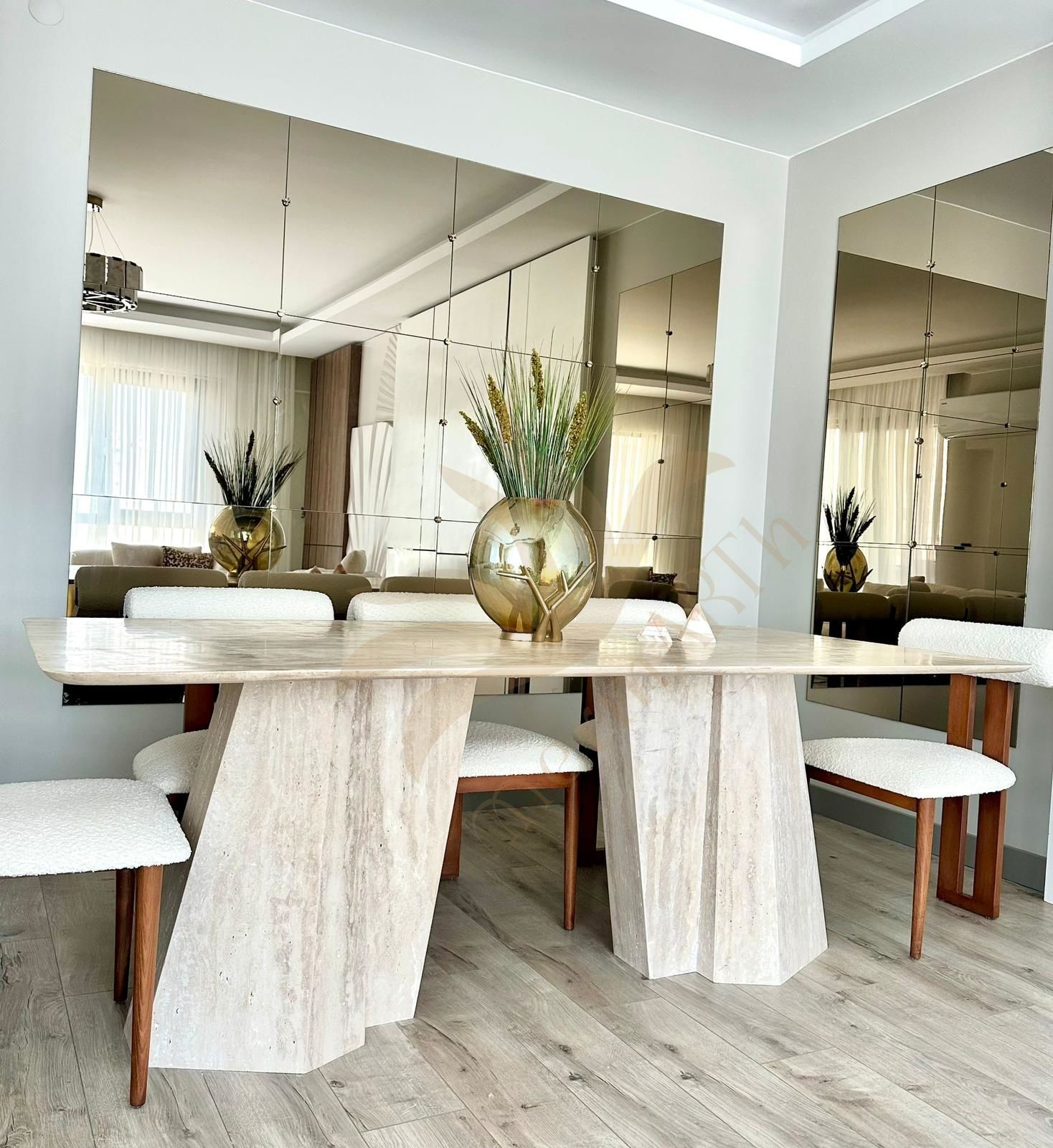
Travertine Dining Table & Custom Made
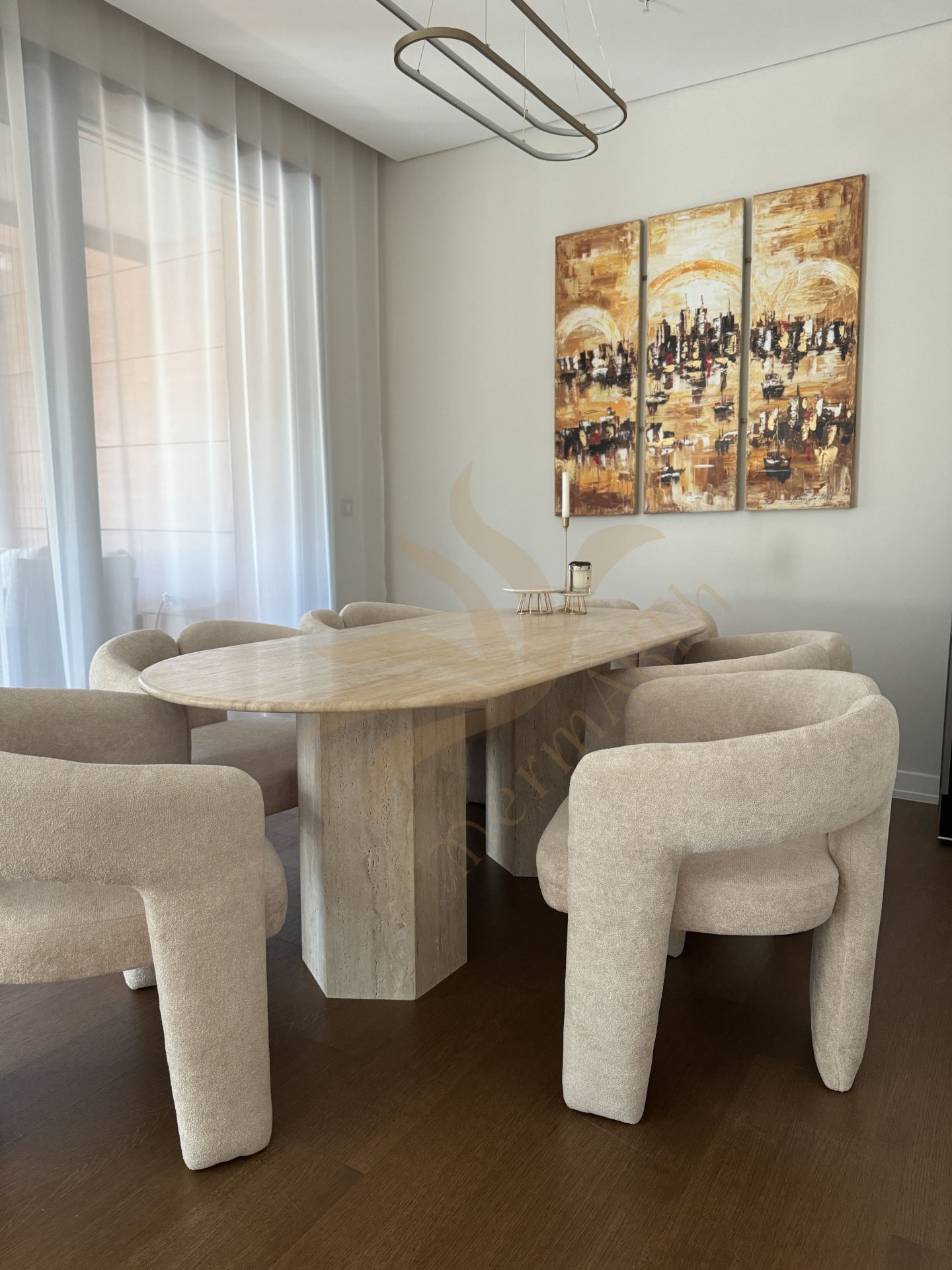
Travertine Dining Table & Huff
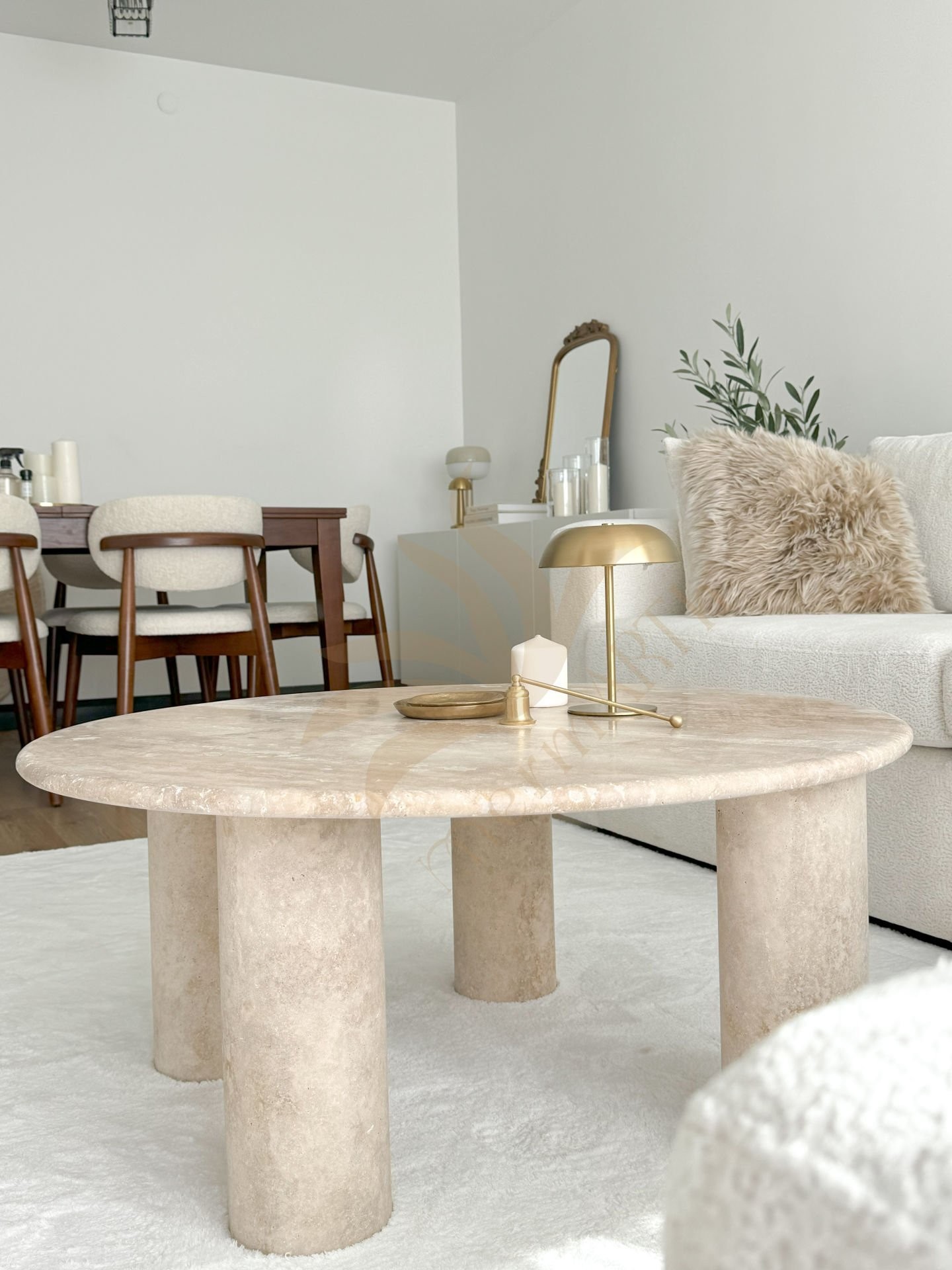
Travertin Coffee Table - Alara

A Travertine Dining Table is not a classic piece of furniture that serves only one function. In modern interiors, it is increasingly understood as an architectural element that influences the entire atmosphere of a space. Anyone who buys a Travertine Dining Table is not simply choosing a table – but making a conscious design decision that redefines the entire living area.
Why Travertine Is More Than Just a Material
Travertine has a natural, matte texture that does not harshly reflect light but softly diffuses it. This creates a calm, almost “architectural silence” within the room. Especially in open living concepts, this effect becomes highly noticeable. Unlike glass or high-gloss surfaces, travertine does not aggressively demand attention – it calms the space without becoming invisible.
This characteristic makes the Travertine Dining Table one of the few materials that works equally well in both minimalist and warm interior styles. In German living spaces, which increasingly focus on reduction and quality, travertine perfectly captures the current aesthetic direction.
Travertine and Its Combination with Other Materials
Another important aspect is the combination with other materials. Travertine harmonizes equally well with wood and metal without losing its own identity. A Travertine Dining Table with black steel legs appears urban and precise. The same stone combined with wooden legs conveys warmth and naturalness. This versatility is no coincidence – it is the result of a geological formation process spanning millions of years, giving the stone a neutral yet highly characteristic texture.
Particularly popular is the combination of a Travertine Dining Table and a Travertine Coffee Table within the same room. The two pieces do not need to be identical – subtle differences in filling or surface treatment create a harmonious and thoughtfully curated atmosphere precisely because of their relationship.
The Travertine Coffee Table as Part of the Overall Concept
A Travertine Coffee Table also feels less like a separate object and more like part of a complete design concept. This creates a visual calmness that is highly sought after in modern German interiors. Unlike traditional wooden or glass coffee tables, a Travertine Coffee Table does not create impact through color or gloss – but through materiality and presence.
It is precisely this understated strength that interior architects and discerning private clients appreciate alike. Travertine does not need to be loud in order to make an impression.
Filled or Unfilled – Polished or Unpolished?
One aspect often underestimated when purchasing a Travertine Dining Table is the choice of surface finish. Travertine naturally contains pores – small cavities created during the stone’s formation process. These can either be filled or left unfilled.
Unfilled travertine preserves the original, raw character of the stone and suits industrial or highly natural interior styles. Filled travertine, on the other hand, appears smoother, more uniform, and easier to maintain in everyday life – ideal for dining areas where the table is used daily.
The surface can also be polished or unpolished. Polished travertine reflects slightly more light and appears more refined, while unpolished travertine feels calmer and more understated. For open living concepts, we often recommend the combination of filled and unpolished travertine – it combines practicality with the characteristic architectural silence that makes travertine so unique.
Custom Production – Because No Space Is the Same
Another reason why more and more people in Germany choose a Travertine Dining Table from MermARTh is the possibility of custom production. Standard dimensions rarely fit perfectly – especially in older apartments, open lofts, or rooms with unusual proportions.
At MermARTh, every Travertine Dining Table is custom-made. Whether oval, round, or rectangular – the shape, size, and surface finish are individually coordinated together with the customer. The result is not a mass-produced product, but a unique piece that fits both spatially and aesthetically.
Buying Travertine – What Really Matters
Anyone looking to buy a Travertine Dining Table should focus on three things: the origin of the stone, the quality of craftsmanship, and secure shipping. Inexpensive travertine from industrial mass production differs significantly from carefully selected natural stone processed with precision.
At MermARTh, every stone comes from controlled quarrying. The tables are produced directly in our own workshop and delivered to Germany in specially designed transport crates, fully insured. No middlemen, no compromise in quality.
Conclusion
A Travertine Dining Table is more than a furnishing object. It is a decision in favor of materiality, calmness, and long-term quality. In a time when German interiors are increasingly reduced to the essentials, travertine offers exactly that: character without noise, beauty without effort.